Skip to content
Kinde & Co

Companies & investments

The history and activities of Kinde & Co

Two distinct family-owned companies, linked by heritage: the original Swedish enterprise and a UK company formed nearly a century later.

Origins

Early beginnings in Gothenburg

The original Kinde & Co was founded by Jacob Wilhelm Kinde in 1905 and incorporated as a limited liability company in 1914. This marked the beginning of a business legacy that has remained under family ownership.

Jacob W Kinde was a prominent industrialist. In 1910, together with Linus Höglund and his brother-in-law Knut Littorin d.ä., he founded AB Jakobsdals Kamgarnspinneri, where he served as chief executive until the end of the 1950s and was the majority owner.

His activities extended across manufacturing, textiles, leather, flooring, timber, property and marine enterprise. He also helped found AB Axel Christiernsson’s factory in Nol with Herman Meeths, served on the board of Herman Meeths AB, held interests in Volvo and Skandinaviska Banken, and founded or owned property companies in Gothenburg and Stockholm.

Worsted spinning
Leather manufacturing
Flooring & timber
Wool & textiles
Real estate & property
Boat marinas
Finance & banking
Industrial ownership

Continuity

A legacy of family ownership

Today, the companies are owned by descendants of Jacob Wilhelm Kinde and their families. Family stewardship has remained a constant while the companies’ activities have evolved with changing economic circumstances.

A century apart. One continuing family legacy.Incorporated in 1914 and 2014

Sweden — Gothenburg

Aktiebolaget Kinde & Co

Founded 1905 · Incorporated 1914

The original family enterprise founded by Jacob Wilhelm Kinde, with historic activity spanning textiles, leather, property, manufacturing and finance.

Swedish company records (opens in a new tab)
United Kingdom

Kinde & Co Limited

Incorporated 2014

A distinct company owned by a grandson of Jacob Kinde and his family, focused on investment and consultancy in renewables, clean tech, health and technology.

UK company records (opens in a new tab)

United Kingdom

A distinct company formed in 2014

Kinde & Co Limited was formed in the United Kingdom in 2014. It is owned by Jacob Kinde’s grandson, Jakob (LinkedIn profile opens in a new tab), and his family, continuing the family’s commercial involvement while remaining legally distinct from the Swedish company.

The UK company focuses on investment and consultancy services, with interests particularly in renewable energy, clean technology, health and general technology.

Portfolio

Investment and advisory activities

The archived company record identifies the following investments and advisory relationships.

Historic Companies

Enterprises connected to the family’s industrial history

GIGAB

Göteborgs Intecknings och Garanti AB

Sweden's second mortgage lending institution for real estate, co-founded by J.O. Jacobson Kinde in 1869.

Read historical note

AB Jakobsdals Kamgarnspinneri

Founded in Gothenburg in 1910

A major textile company founded by Jacob Kinde, Linus Höglund and Knut Littorin d.ä. in 1910.

Read historical note

Historical Note

The companies founded by Jacob Kinde, his brother Johan Kinde and their father Johannes Oscar Jacobson Kinde

A historical brief covering the family’s textile and industrial holdings, retail interests, energy ventures, property companies and financial alliances from 1869 to the present.

Core Textile & Industrial Holdings

AB Jakobsdals Kamgarnspinneri

Org No. 556090-8377

  • Historical PathFounded in 1910 in Gothenburg by Jacob Kinde, Linus Höglund, and Knut Littorin Sr. The family retained majority ownership until 1978.
  • The Ekorren LogoThe exact historical logo for AB Jakobsdals Kamgarnsspinneri features a red squirrel sitting up and holding a ball of yarn (rather than biting it), which was printed on their vintage “Ekorren” yarn paper labels and knitting pattern booklets.
  • The TransitionIn 1978, the company was acquired by Investment AB Asken. To survive the Swedish textile crisis (teko-krisen), the new owners secured millions in state-funded emergency loans (Avskrivningslån) to maintain domestic wool capacity.
  • Current StatusIn the mid-1980s, heavy industrial spinning was ceased in Gothenburg, and the company transitioned into an asset-light wholesale, design, and import house based in Dalsjöfors (Borås). The corporate entity never dissolved. It exists continuously today under the name Home of Textile Scandinavia AB, actively marketing luxury home furnishings under the legacy brand Jakobsdals Textil.

Färgeriaktiebolaget Levanten

  • Historical PathOperated as a highly specialized textile dyeing and finishing mill located in the Örgryte district of Gothenburg.
  • The TransitionIt functioned as a primary corporate subsidiary of Jakobsdals Kamgarnspinneri to process raw spun yarn.
  • Current StatusPhased out and liquidated mid-century as Gothenburg’s primary industrial textile infrastructure collapsed under global competition.

Matfors Yllefabrik AB

  • Historical PathA prominent wool and textile manufacturing plant situated in Matfors (Medelpad).
  • The TransitionThe company was sold in the 1920s, after which the mill sustained operations through various regional ownership changes.
  • Current StatusPermanently closed in 1962 as a direct consequence of the early waves of the Swedish textile crisis.

Bohus Läderfabrik AB

  • Historical PathA heavy industrial leather tannery and processing plant situated in Mölndal/Bohuslän.
  • Current StatusWrapped up mid-century following post-war shifts in international trade, which made domestic industrial tanning economically unviable.

Retail, Consumer Goods & Maritime Infrastructure

Kindes Båtvarv / Amundö Marina

  • Historical PathFounded by Jacob Kinde to tap into Gothenburg’s rich maritime culture and boating industry.
  • The EvolutionRather than dissolving post-WWII, this strategic coastal boatyard and service operation evolved directly with the region’s expanding nautical needs.
  • Current StatusThis original footprint operates today as Amundö Marina, a premier, highly active boatyard and marina facility in the Amundö area of southern Gothenburg. It continues to serve the region as a major hub for modern boat storage, yacht services, and private boat club operations.

AB Varuhuset Linopeters

Originally: Göteborgs Linoleum-Magasin Peters, Franzen & Co

  • Historical PathEstablished in partnership with Joseph Peters around 1910.
  • The TransitionOperated for decades as a prestigious regional department store out of Södra Larmgatan 12 and Vallgatan 7 in Gothenburg, specializing in premium flooring, carpets, and household textiles.
  • Current StatusClosed late in the 20th century following decades of successful retail operation.

Aktiebolaget Carl Alms Skomanufaktur

  • Historical PathStructured as a joint-stock company (aktiebolag) by Jacob Kinde and his brother-in-law Albert Fränkel around 1917.
  • The TransitionOperated a prominent manufacturing facility on Kungsgatan 22 (and later Nya Varvet), producing legendary, high-end welted leather shoes.
  • Current StatusClosed down mid-century during the widespread consolidation and decline of the domestic Swedish footwear industry.

Forestry, Chemical & Energy Sectors

AB Svensk Kraftlinoleum

  • Historical PathCo-founded by Jacob Kinde to enter the booming industrial flooring market.
  • The TransitionMerged into the industry leader Forshaga Linoleumsfabrik AB.
  • Current StatusThis combined lineage evolved into the modern global flooring conglomerate Forbo Flooring Systems (operating domestically today as Forbo Flooring AB).

Nissans Träförädlings AB & AB Träindustri

  • Historical PathTimber manufacturing, wood processing, and sawmill companies supplying raw lumber during Sweden’s urban expansion.
  • Current StatusAbsorbed into larger regional forestry cooperatives during mid-century market consolidations.

Nissafors Träkolsfabrik & Göteborgs Stubbvedsaffär

  • Historical PathSpecialized companies focused on charcoal production and stump-wood fuel distribution.
  • Current StatusFaded out naturally around the mid-1900s as wood-based fuels were replaced by coal, oil, and widespread electricity.

Örgryte Kemiska & AB Elektrokompaniet

  • Historical PathEarly pioneering enterprises in regional chemical processing and commercial electrical utility installations.
  • Current StatusDissolved or integrated into larger municipal and national utility frameworks as Sweden centralized its national energy grid.

Real Estate, Finance & Corporate Alliances

Aktiebolaget Kinde & Co.

  • Historical PathFounded as a commercial merchant trading house around 1905 and incorporated in 1914, serving as a primary investment vehicle for the family’s diverse corporate ventures.
  • Modern FootprintThe operational philosophy of this original family trading entity was mirrored decades later internationally by the family.

Herman Meeths AB & AB Skotten

  • Historical PathA close corporate alliance between Jacob Kinde and department store mogul Herman Meeths. They co-owned the real estate company AB Skotten in Stockholm.
  • The TransitionThe iconic Meeths department store on Kungsgatan in Gothenburg outlived its founders and was acquired by Åhléns in the mid-1960s.

AB Axel Christiernssons Fabrik (Nol)

  • Historical PathCo-founded in Nol by Jacob Kinde alongside Herman Meeths, specializing in industrial lubricants, chemical-technical products, and oils.
  • Current StatusHighly successful and active today under the name AXEL Christiernsson, standing as one of the leading manufacturers of lubricating greases in Europe and the United States.

Urban Real Estate Portfolio

  • CompaniesFastighets AB Commercia, Fastighetsaktiebolaget Partillo (Gothenburg), and Fastighets-AB Domkvarteret (Gothenburg).
  • Current StatusThe legal entities were eventually dissolved or acquired, but the physical historic structures remain prominent urban anchors today (e.g., the properties of Fastighets AB Domkvarteret are situated directly in the historic center of Gothenburg by the Cathedral).

Volvo & Skandinaviska Banken

  • Historical PathJacob Kinde held strategic early equity stakes in both entities during their initial growth eras.
  • Current StatusSkandinaviska Banken merged with Stockholms Enskilda Bank in 1972 to form SEB (Skandinaviska Enskilda Banken), which remains one of the fundamental financial pillars of modern Scandinavia.

Bankirfirman Thenberg & Kinde AB (now Norion Bank)

  • Foundation (1913)Co-founded in Gothenburg by Jacob Wilhelm Kinde’s brother, Johan Olof Jacobson Kinde (1881–1975), and Nils Thenberg to handle specialized securities trading and stockbroking.
  • The Brokerage Era (1918–1990s)Following Swedish legislative changes in 1918, it restructured as a formal fondkommissionär (brokerage firm). It famously launched the Göteborgs OTC-lista (The Gothenburg List) in 1995 to trade shares of smaller regional companies before they grew large enough for the main stock exchanges.
  • Transition to Consensus (2014)In September 2014, the firm shifted its focus deeper into private banking and corporate finance, changing its corporate name from Thenberg & Kinde Fondkommission AB to Consensus Asset Management AB.
  • Final Bank Acquisition (2026)In April 2026, Consensus Asset Management was acquired by Norion Bank AB (a niche commercial lender formerly known as Collector Bank) in a cash transaction valued at SEK 171 million.
  • DelistingAfter capturing over 96% of shareholder votes, Norion Bank initiated compulsory share redemption. The century-old financial lineage officially delisted from the Spotlight Stock Market on April 22, 2026.

GIGAB (Göteborgs Intecknings och Garanti Aktiebolag)

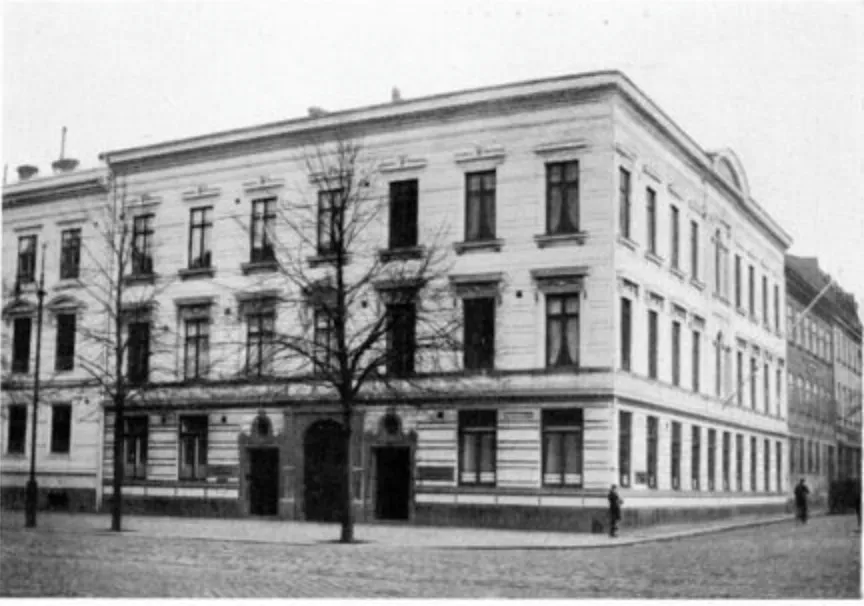
GIGAB office building at Västra Hamngatan 10 in Gothenburg
Bolagets kontorsbyggnad, V. Hamngatan 10.
  • Foundation (1869)Co-founded by Johannes Oscar Jacobson Kinde in Gothenburg to provide property mortgages and financial guarantees to address a severe housing shortage caused by the city’s industrial population boom.
  • Growth & Institutional ScaleThe firm grew into a core fixture of Gothenburg finance. Its total assets grew from 4 million SEK in 1878 to 62 million SEK by 1928, peaking at 71 million SEK by 1938. For decades, it was operated out of its historic landmark headquarters at Västra Hamngatan 10.
  • The Götabanken MergerAs Sweden’s banking sector began local consolidation, GIGAB was absorbed into Götabanken (historically Göteborgs Bank), unifying the regional commercial banking and housing mortgage sectors.
  • Centralization via StadshypotekAmid further state-level streamlining of Swedish property finance, Götabanken’s mortgage operations were integrated into Stadshypotek (The Urban Mortgage Bank), which centralized municipal housing loans nationwide.
  • The Handelsbanken Era (1997–Present)In 1997, Svenska Handelsbanken AB acquired Stadshypotek in one of the largest financial mergers in Swedish history. The pioneering real estate credit legacy started by the founders lives on today as part of Handelsbanken’s foundational mortgage infrastructure.